Best Paper Airplane Launcher Kits for Hands-on STEM Fun
Looking for a paper airplane launcher that combines learning with play? This guide highlights five top options best suited for different ages and goals, from classroom-style STEM activities to DIY back‑yard experiments. Whether you want a wooden build, a dual-motor launcher, or a simple foam-flight kit, these picks help you test flight designs, understand basic aerodynamics, and encourage hands‑on problem solving. Each product targets a different buyer: educators seeking structured kits, parents shopping for STEM-friendly gifts, and hobbyists chasing repeatable launches.
Summary of chosen products
- Pathfinders STEM Kit – Paper Airplane Launcher (PATHFINDERS)
- Doctor Jupiter Paper Airplane Launcher Kit for Kids (Doctor Jupiter)
- Smartivity 2in1 Hydraulic Aeroplane & Dart Launcher (Smartivity)
- 4M Electric Paper Airplane Launcher (4M)
- Doctor Jupiter Paper Airplane Launcher Kit (DIY wooden launcher) (Doctor Jupiter)
Pathfinders Paper Airplane Launcher Kit

The Pathfinders kit is a wooden, hand-built launcher designed to deliver repeatable paper planes, gliders, and foam designs. It is rubber-band powered and requires about 60 minutes to assemble. Best for students and hobbyists who want a durable, test‑and‑tweak experience and reliable launches for design comparisons.
Best for: classrooms or home labs focused on repeatable experiments and design testing. It’s ideal for learners who value a physical, tangible build and long‑term experimentation.
Caution: assembly time varies with skill; ensure adults assist younger builders. The kit’s success hinges on precise assembly and consistent rubber-band tension.
Doctor Jupiter Paper Airplane Launcher Kit

This kit includes a DIY launcher and 50 paper airplane sheets in five designs, enabling kids to fold, load, and fire planes. It emphasizes STEM concepts like thrust, lift, and drag through hands‑on play and is well suited for parents seeking a screen‑free activity that still teaches core flight principles.
Best for: younger builders who appreciate guided designs and immediate flight results. It suits classroom settings or family projects where rapid setup and clear outcomes matter.
Caution: expectations about maximum flight distance should be tempered by design differences among planes; some planes may require fine-tuning for optimal range.
Smartivity 2in1 Hydraulic Aeroplane & Dart Launcher
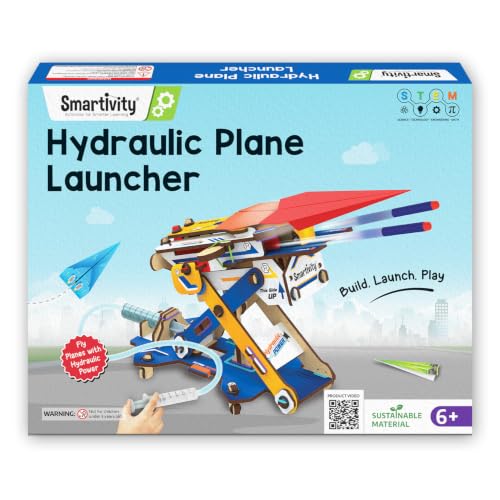
Smartivity’s kit combines a hydraulic launch system with both plane and dart launching. It guides kids through a step‑by‑step build, promoting engineering understanding and hands‑on experimentation. It’s designed for ages 6–14 and includes replacement parts to extend play.
Best for: kids who enjoy mechanical builds and multi‑mode launch experiments. Choose this if you want a structurally rich project with long‑lasting parts and a clear STEM narrative.
Caution: hydraulic systems can be sensitive to assembly accuracy; follow the manual closely for consistent performance.
4M Electric Paper Airplane Launcher

The 4M kit features a dual‑motor launcher with adjustable launch angles, letting users test different flight paths. It requires batteries and provides a high‑speed, physics‑driven experience that appeals to teens and adults who want to explore aerodynamics with a hands‑on, power‑driven tool.
Best for: older kids and adults who want stronger launches and adjustable angles for experiments. It’s a good fit for a more advanced STEM challenge or a demonstration setup.
Caution: batteries are required (not included); ensure safe handling during assembly and operation.
Manmel 12 Pack Airplane Launcher Toys

Manmel offers a value-packed option with two launchers and ten foam gliders in a foam‑and‑catapult design. Foam planes are lightweight, making them easy to fly indoors or outdoors. The set emphasizes safe play and quick setup for large group activities or parties.
Best for: group play, party favors, or quick demos where multiple launchers are useful. Choose this for affordable, accessible air‑combat style play that still teaches basic flight concepts.
Caution: foam planes can be affected by minor damage; inspect planes before use to prevent flight issues.
Buying Guide
- What is your primary goal? If you want structured STEM learning, choose wooden or modular kits (Pathfinders or Doctor Jupiter). For quick demos, simpler foam or multi‑pack sets (Manmel) work well.
- What age range is intended? Kits labeled for ages 6–14 suit younger builders, while dual‑motor or hydraulic models better serve teens and adults seeking advanced experimentation.
- Is assembly time important? Some kits require longer builds (Pathfinders, Doctor Jupiter wooden launchers). Others emphasize quick setup (foam sets) for immediate launches.
- What kind of flight testing will you do? Look for repeatable launches (Pathfinders) to compare designs, or adjustable angles and power (4M) for exploring aerodynamics under varying conditions.
- Safety considerations? Foam and foam‑glider kits often pose fewer risk; wooden or metal components may require careful handling and adult supervision for younger users.
- What about parts and longevity? Kits with replacement parts (Smartivity) extend play life. Consider whether you want a kit that can be rebuilt or reconfigured over time.
Frequently Asked Questions
- Which launcher is best for classrooms? A kit with clear lesson plans, durable construction, and repeatable results—such as wooden or modular launchers—works well in a classroom.
- Do these kits teach physics concepts? Yes. Most kits demonstrate thrust, lift, drag, and timing and allow learners to observe how design changes affect flight.
- Are batteries required? Some kits require batteries for motors; check each product’s requirements before purchase.
- Can foam planes be reused? Yes, many foam planes are reusable, but inspect for wear and replace damaged parts as needed.
- Is adult supervision needed? For younger children, adult supervision is recommended, especially during assembly or when using powered launchers.
- What’s the best value option? Multi‑pack offers cost efficiency and more planes for testing multiple designs, while a dedicated wooden launcher provides durability and repeatable results.