Best Jigsaw Puzzles for Stroke Patients: Easy, Large-Piece Options for Mind and Motor Skills
Finding suitable puzzles for stroke recovery means prioritizing large pieces, clear imagery, and forgiving designs that support fine motor practice and cognitive recall. This guide highlights five Amazon-sourced puzzles and activity books that are well-suited for stroke survivors, caregivers, and therapy groups. Each pick targets different needs—speech therapy reinforcement, memory aid, or gentle cognitive stimulation. The buyer types addressed include first-time relearners seeking simple, engaging tasks; caregivers seeking structured activities for daily routines; and seniors needing durable, easy-to-handle pieces.
| Product | Why It’s a Good Fit | Best For |
|---|---|---|
| Stroke Recovery Activity Book – Large Print | Large print, guided activities for rehabilitation routines. | Individuals with aphasia or attention challenges. |
| 6 Pack 36 Piece Large Jigsaw Puzzle for Seniors | Multiple puzzles with big pieces for gradual engagement. | People new to puzzles or needing low-frustration options. |
| 5 Packs 16 Piece Large Jigsaw Puzzles for Elderly | Nostalgic images; lightweight 16-piece format. | Seniors in early to mid-stages of dementia or memory care. |
| 6 Pack 16 Large Piece Puzzles for Seniors – Dolphin Tower | Embossed pieces for grip and an instructional guide. | Users needing clear cues and physical ease. |
| The Easy and Relaxing Memory Activity Book for Adults | Relaxing brain games and easy puzzles for daily practice. | Adults seeking gentle cognitive engagement. |
Stroke Recovery Activity Book – Large Print

This large-print workbook targets cognitive exercises and language practice, supporting rehabilitation after stroke or brain injury. It’s best for readers who benefit from high-contrast text and structured activities that reinforce daily routines. The format supports repetition, which can aid memory and language retrieval in aphasia therapy. Consider this option when large text and guided activities are priorities over complex puzzles.
Best for: Individuals seeking a low-strain, volume-based activity with clear print and guided tasks. Caution: Some pages may be repetitive; pace the sessions to maintain engagement.
6 Pack 36 Piece Large Jigsaw Puzzle for Seniors
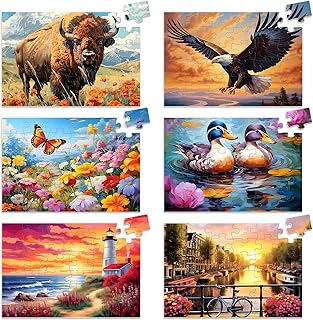
This set provides multiple 36-piece large puzzles designed for seniors and those with memory challenges. The pieces are bigger, making handling easier and reducing frustration. This product suits caregivers seeking varied activities within a single purchase. Limitation: Some puzzles may still require fine motor control that can vary by user.
Best for: Caregivers needing a flexible, multi-puzzle option. Choose this if you want to rotate activities to maintain engagement across sessions.
5 Packs 16 Piece Large Jigsaw Puzzles for Elderly

These 16-piece large puzzles from Party Greeting Store feature nostalgic imagery designed to spark conversations and memory recall. With large, easy-to-grip pieces, they provide a gentle cognitive workout suitable for early to mid-stages of dementia. The packaging omits explicit dementia labeling, which can be preferable in some care settings. Best for: Seniors who benefit from familiar visuals and easier handling. Limitation: The 16-piece format offers limited challenge for advanced solvers.
6 Pack 16 Large Piece Puzzles for Seniors – Dolphin Tower

This offering emphasizes grip-friendly, embossed pieces and an instructional guide to support independence during assembly. With 5-inch-long pieces and 0.1-inch thickness, these puzzles are designed for steady hands and easier manipulation. Best for: Users who benefit from tactile cues and explicit guidance. Limitation: The stated piece count and size may still feel small for some users with severe motor impairment.
The Easy and Relaxing Memory Activity Book for Adults

This memory activity book provides relaxing brain games, simple puzzles, and activities designed to reduce cognitive load while promoting mental engagement. It’s best for adults seeking low-stress, daily routines that support recall and attention. Limitation: It is a book rather than a puzzle set, so progress tracking may be less tangible than with jigsaw tasks.
Buying Guide
Key considerations for selecting jigsaw puzzles and memory activities for stroke recovery:
- Piece size and grip: Look for large, easy-to-handle pieces with embossed textures if needed for finger strength or tremor management.
- Image clarity and content: High-contrast or nostalgic images can aid recognition and conversation.
- Session length and difficulty: Start with short, simple tasks and gradually increase complexity to avoid frustration.
- Therapy alignment: Choose activities that align with language, attention, and motor therapy goals.
- Durability and maintenance: Opt for sturdy pieces that can withstand frequent handling and potential drops.
- Safety: Ensure there are no small parts that could pose choking hazards for certain users; check packaging for age and ability cues.
Frequently Asked Questions
- What makes a jigsaw puzzle suitable for stroke patients?
Answer: Large pieces, simple images, and forgiving designs that support motor control and cognitive retraining. - Are memory activity books useful for stroke recovery?
Answer: Yes, when they provide structured, low-stress activities that reinforce recall and language practice. - How should I choose puzzle difficulty?
Answer: Start with 16- or 20-piece sets and progress to 36-piece sets as coordination improves, ensuring cues and guidance remain available. - Is repetition important?
Answer: Yes, repeating similar tasks helps reinforce neural pathways critical to recovery and learning. - Can these products help with dementia-related memory care as well?
Answer: Some items are designed for dementia care, emphasizing nostalgic visuals and easy handling, which can aid memory recall. - What should caregivers monitor during puzzle activities?
Answer: Attention span, frustration levels, grip stability, and any signs of fatigue or overstimulation.