Best Human Body Plastic Model Kits for Learning Anatomy at Home
Answering your search for a reliable human body model, these top picks offer hands-on anatomy learning with durable, child-friendly designs. Suitable for students, homeschooling families, teachers, and budding medical enthusiasts, these kits cover bones, organs, and systems with varying levels of detail. The following five selections balance realism, ease of use, and educational value to help you choose the best fit for your learning goals.
| Product | Best For | Key Feature |
|---|---|---|
| GobiDex Human Body Skeleton Model Kit | Young learners who enjoy glow-in-the-dark learning | Glow-in-the-dark bones for visual appeal |
| Ceonam 11 Inch Small Human Body Model | Classroom or homeschool study of internal organs | 15 detachable internal parts for hands-on study |
| Science Can Interactive Human Body Model | Interactive, quiz-driven learning | 2 modes: Explanation and Quiz with a bundled anatomy book |
| Be Amazing! Interactive 60-Piece Body Puzzle | Hands-on exploration with full assembly and posing | Fully articulable model with 60 pieces |
| National Geographic 32-Piece Anatomy Set | Structured anatomy study with glow-in-the-dark bones | 9 organs, 18 glow-in-the-dark bones, comprehensive guide |
GobiDex Skeleton Model Kit For Kids

The GobiDex Interactive Human Body Model stands about 12.6 inches tall and is self-standing. It is glow-in-the-dark, making anatomical exploration engaging for kids. Best for learners who enjoy visual cues and interactive play, especially in low-light settings. The parts are designed to be disassembled and reassembled for repeated practice. A caution: ensure safe handling during assembly to avoid small parts misplacement.
Ceonam 11 Inch Detachable Human Body Model

This 11-inch torso offers 15 detachable parts, including brain, heart, lungs, stomach, and more. Best for in-depth anatomy study in classrooms, clinics, or at home. The PVC material is lightweight and easy to clean, aligning with practical classroom needs. A limitation: smaller scale may reduce detail compared to larger kits, which can be less ideal for very precise study.
Science Can Interactive Human Body Model

Science Can combines tactile exploration with digital-style learning. It features 15+ removable organs and bones, plus a 26-page illustrated anatomy book and four double-sided cards. Best for learners who benefit from guided explanations and quizzes to reinforce memory. Choose this if you want a self-contained curriculum resource; a potential drawback is that some users may prefer larger-scale anatomy for finer detail.
Be Amazing! Interactive 3D Body Puzzle
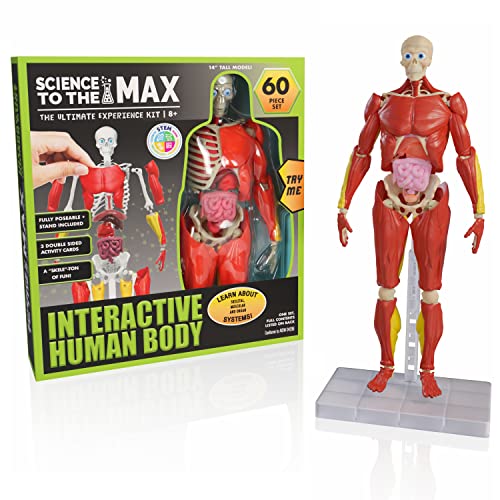
This 14″ tall, fully articulated model includes 60 pieces to assemble bones, muscles, and organs on an adjustable stand. Best for hands-on learners who want to mimic real movement and pose. It is a comprehensive, all-in-one kit, but assembly takes time and space, so consider your learning environment before purchasing.
National Geographic 32-Piece Anatomy Set

This 32-piece set includes a 9″ shell with 18 glow-in-the-dark bones and 9 organs, plus tools and a detailed guide. Best for structured study and teacher-led demonstrations. It offers a portable, classroom-ready kit with a robust learning guide. A limitation: glow-in-the-dark features may require specific lighting to maximize visibility.
Buying Guide
What should you consider when choosing a human body model kit?
- Audience and age: Younger kids benefit from larger, simpler parts; older students may prefer highly detailed or detachable components.
- Detail level: Do you need just bones, or internal organs and systems? Detachable parts help with hands-on learning.
- Durability and material: PVC and similar plastics are common; ensure parts are sturdy and safe for repeated handling.
- Size and storage: Larger models require more space; compact kits are easier to store in classrooms or homes.
- Learning aids: Included manuals, books, or cards add educational value and structure to lessons.
- Glow or visual features: Glow-in-the-dark models aid engagement in dim settings but may need charging light beforehand.
- Maintenance: Easy-clean components reduce classroom downtime and extend usability.
Common Scenarios And Package Comparisons
- Best for classroom rotation: Ceonam 11 Inch and National Geographic 32-Piece provide durable parts and guided learning materials.
- Best for visual engagement: GobiDex Skeleton and National Geographic set leverage glow-in-the-dark bones for memorable study.
- Best for guided learning: Science Can with its book and quiz mode offers structured, interactive lessons.
- Best for full-body movement practice: Be Amazing! 60-Piece Puzzle allows posing and dynamic exploration of anatomy.
FAQ
- How many parts should a beginner require?
Starting with 10–15 detachable parts is often enough to cover major organs and bones without overwhelming a learner. - Are these models safe for young children?
Most kits use child-safe PVC with assembled parts designed to be handled or detached under supervision. - Do these kits include educational materials?
Many options include manuals, illustrated books, or cards to aid teaching and study. - Which model is best for a science classroom?
Ceonam or National Geographic sets balance realistic anatomy with durable design and instructional guides. - Can glow-in-the-dark features aid learning?
Glow features enhance visual recall, particularly in dim environments or demonstrations.