Best Acoustic Guitar Strings for Beginners: Easy Note-Tone Sets for New Players
Direct answer for buyers: beginners should choose light or extra-light bronze or phosphor-bronze sets that reduce finger tension while still delivering clear, balanced tone. The top picks below emphasize easy playability, comfortable feel, and reliable intonation, helping new players build confidence quickly. The following five sets are best for beginners, each with a distinct strength—ease of playing, bright projection, or long-lasting tone.
| Product | Best For | Why It Stands Out |
|---|---|---|
| Ernie Ball Earthwood Extra Light 80/20 Bronze | Very easy fretting | Low tension; clear, balanced tone with good projection |
| D’Addario EJ11 80/20 Bronze Light | Bright, durable beginner set | Precision wound; classic bright voice; easy playability |
| Zager Easy Play Acoustic Strings | Minimal finger fatigue | Soft-core, smooth coating; reduces finger pressure |
| D’Addario EJ16-3D Phosphor Bronze 12-53 | Versatile for various styles | Warm, balanced tone with good durability |
| Elixir Acoustic 80/20 NANOWEB | Long-lasting tone | Coated for longevity; bright, focused tone |
Ernie Ball Earthwood Extra Light 80/20 Bronze Acoustic Strings

Features include a bright, balanced tone with excellent projection. The extra-light gauge reduces string tension, making it easier to press the strings across the fretboard. Wound strings use 80% copper and 20% zinc around a high-carbon steel core for reliability. Best for beginners who want minimal effort and clear, present tone. Caution: very soft-touch players may prefer a slightly heavier gauge as skills progress.
D’Addario EJ11 80/20 Bronze Acoustic Strings, Light
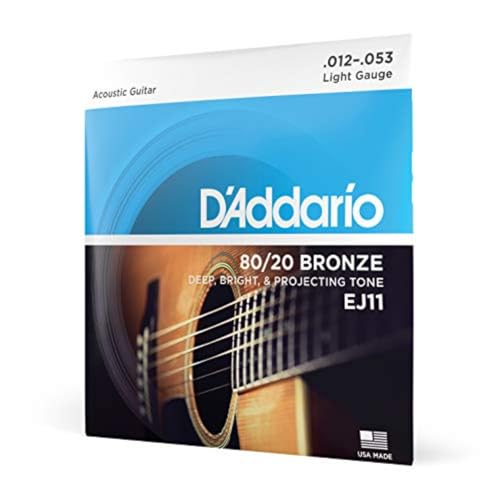
Reference notes highlight precision wound construction over a hexagonal high-carbon core and a bold, bright sound with crisp projection. This classic 80/20 bronze set offers an approachable feel for beginners and a voice that tends to cut through practice room noise. Best for players who want a traditional bright tone and dependable tuning stability. Caution: may feel a touch brighter on very sensitive first-time players.
Zager Easy Play Acoustic Strings
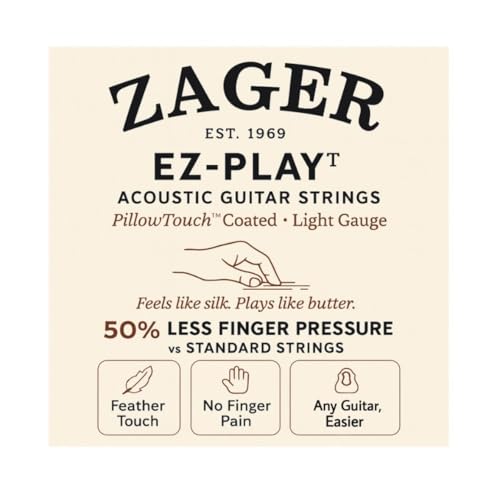
Best for players with finger pain or sensitive hands. Zager uses a patented soft-metal core with an ultra-smooth coating to require less finger pressure, reducing soreness and fatigue. The set is designed for comfort and long practice sessions, with a long-standing reputation among professionals for consistency. Caution: some players report a slightly different feel from standard nickel-wound sets; the lighter touch may take practice to adjust.
D’Addario EJ16-3D Phosphor Bronze Acoustic Strings

Phosphor bronze wrap wire provides a warm, balanced tone with strong projection. Wound over a hex core, these strings are versatile across genres and remain a staple in beginner and intermediate gear libraries. Best for players seeking a classic acoustic voice compatible with many styles. Caution: bronze strings can tone-zone a little quicker and may require more frequent tuning during initial setup.
Martin Authentic Acoustic Strings, Extra Light 10-47

Designed with higher tensile strength and tin-plated core wire for a quick response and tuned stability. These 80/20 bronze strings offer a bright, punchy attack that mellows with play, suitable for blues and fingerpicking styles. Best for beginners who want a durable, high-quality set that still feels easy under the fingers. Caution: initial brightness may require a short break-in period.
Elixir Acoustic Guitar Strings 80/20 NANOWEB

Elixir NANOWEB-coated strings deliver the longest-lasting tone, with a bright, focused voice and a smooth feel. Ideal for beginners who want less frequent string changes while maintaining consistent response. Best for players who practice daily and want stability across sessions. Caution: coating can feel slightly slick to new players initially.
Buying Guide: Key Purchase Considerations
What gauge is best for beginners?
Light and extra-light gauges reduce string tension and ease fretting, helping novices develop calluses without excessive finger fatigue. Start with gauges in the .010–.053 range or lighter, then adjust as technique improves.
Bronze versus phosphor bronze versus coated strings
Bronze (80/20) sets are bright and projecting, good for learners who want a crisp tone. Phosphor bronze offers a warmer, balanced sound and longer life. Coated strings (like Elixir NANOWEB) last longer but can feel slightly slick and cost more; choose coated if you practice daily or play in humid environments.
How important is playability for beginners?
Playability is critical for building technique. Choose sets described as “easy,” “soft,” or “anti-fatigue” if finger pain or stiffness is a concern. Soft cores and smooth windings can reduce finger pressure.
Durability and tuning stability
Beginner players benefit from strings with stable intonation and resistance to corrosion. Stainless or tin-plated cores can improve tuning stability and longevity, especially for new players who may practice inconsistently.
Which brand is most reliable for beginners?
Established brands (D’Addario, Elixir, Martin, Ernie Ball) provide consistent measurements, stable ball ends, and predictable tone. For beginners, consistency reduces the learning curve when switching between practice and performance setups.
Intonation and setup considerations
New players should ensure the guitar is properly set up and intonated. A well-set neck, truss rod, and saddle height can significantly affect how easily a string feels. If the first attempts feel off, consider a quick setup from a professional or a shop that offers beginner-friendly adjustments.
How to choose based on playing style
- Fingerstyle or soft chords: lighter gauges for easier fretting and gentle attack.
- Bluegrass or flatpicking: a brighter tone with good projection; consider phosphor bronze or 80/20 bronze sets.
- General practice and casual playing: balanced sets with long life balance, such as coated options.
Maintenance tips for beginners
- Wipe strings after playing to reduce oils and sweat that corrode winding.
- Change strings regularly during the early learning phase for consistent tone and feel.
- Keep the guitar in a stable environment to prevent warping or neck issues that affect playability.
FAQ
- What gauge should a beginner use on an acoustic guitar?
Light to extra-light gauges (e.g., .010–.047 or .010–.053) are typically easiest for beginners, reducing string tension and finger fatigue.
- Are coated strings worth it for beginners?
Coated strings last longer and resist corrosion, which can be beneficial for daily practice. Some players may notice a slight difference in feel or brightness.
- Which brand offers the most beginner-friendly strings?
Major brands like D’Addario, Martin, Ernie Ball, and Elixir provide well-tested beginner-friendly options with predictable tone and tension.
- Should beginners choose bronze or phosphor bronze?
Both are suitable; bronze sets are brighter and projective, while phosphor bronze sets are warmer and more balanced. Your preference may depend on your guitar and style.
- How often should beginners change strings?
For beginners, changing every 1–3 months with regular practice is common, or sooner if strings sound dull or feel stiff.
- Is setup important for new players?
Yes. A proper setup improves playability, intonation, and tone. If the strings feel hard to press or intonation seems off, consult a professional.